Payments
Making payments
Most payments made by ChargeOver will most likely be taken by auto pay. ChargeOver's default setting is to save the payment method on file and then opt the customer into auto pay right away. If you want to allow your customers the option to opt in or out of auto pay, you can read more about that here.
Any payment method you set up in ChargeOver is immediately available to you and your admin users.
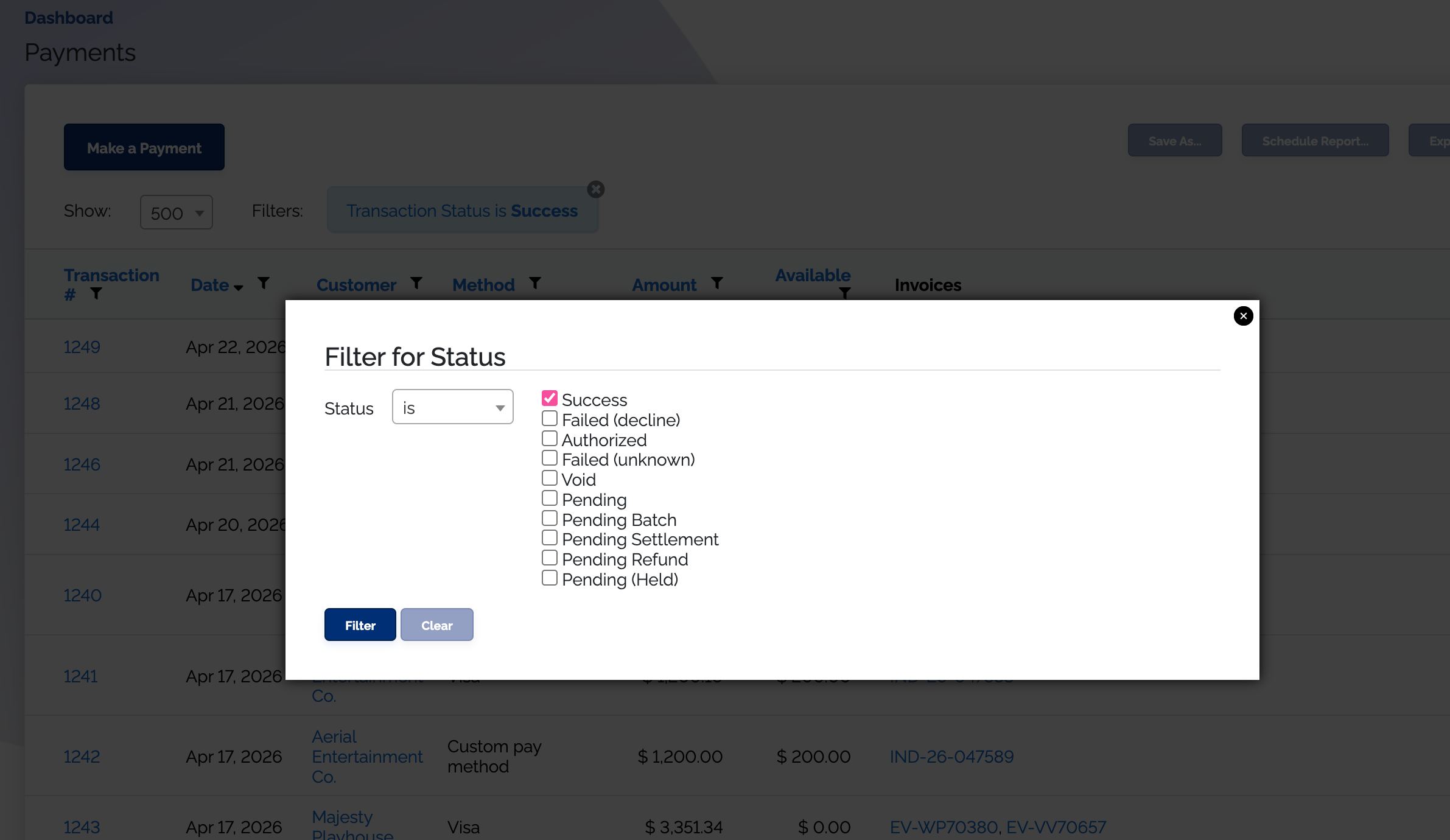
Payment status'
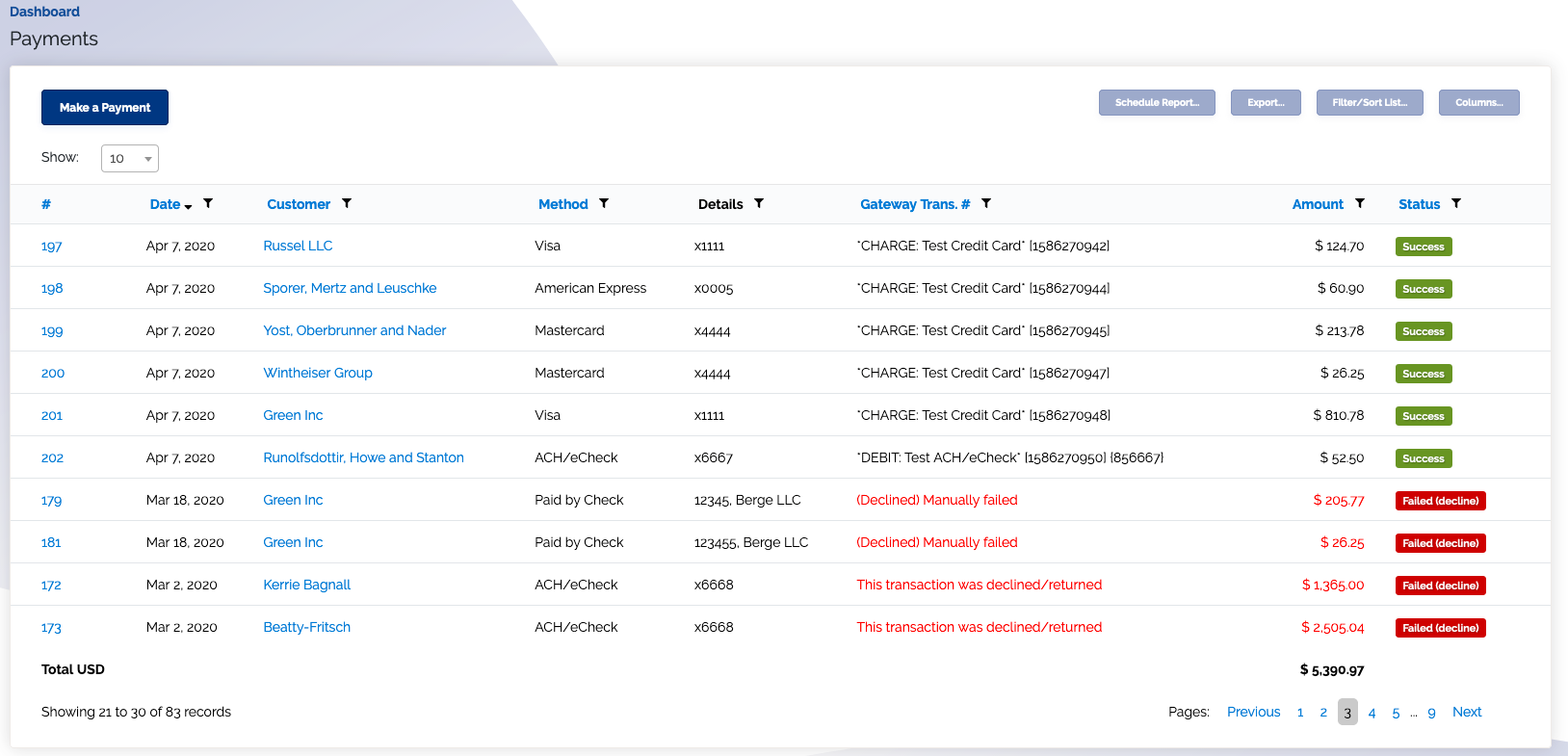
There are a few different payment status' you might see in ChargeOver. We get these payment status' directly from the gateway that is processing the payments. The following status' we support are:
- Success
- This means the customer's payment went through and was deposited into the gateway. You should be seeing your gateway deposit the funds from the payment into your bank account either immediately, as is the case with credit card payments, or within a few days if it is an ACH payment.
- Failed (decline) and Failed (unknown)
- The payment was declined by the gateway. Click into the payment in ChargeOver to see if there is a 'Need more details' box you can click to get next steps. Often times you will need to reach out to the gateway to get a clear reason why the payment was declined. ChargeOver normally does not get much information as to why a gateway declined a payment.
- Authorized
- Void
- This status indicates a voided or cancelled payment. If you manually voided a payment in ChargeOver. The transaction is no longer going to appear in your MRR reporting after is has been voided.
- Pending
- Usually you will see this status appear on your ACH payments. ACH payments always take longer to succeed or decline with the gateway and so the payment will be assigned a pending status until the gateway has decided the status of the payment and communicated that back to ChargeOver. If you use Authorize.net as your gateway, you can learn more about how to handle pending transactions with them here.
- Pending batch
- Pending settlement
- Pending refund
- Pending (Held)
- You will see this status if you are using a gateway like Authorize.net. Authorize.net is either holding a transaction for fraud review or another customer service review process, or something is misconfigured in your gateway settings.
Paying an invoice in ChargeOver
Since your customer's first payment will most likely be taken through our auto-pay function, the customer will be able to pay their invoices through the multiple avenues provided in ChargeOver.
If for some reason you need to add a new payment method manually for a customer, you can do so.
A customer paid an invoice outside of ChargeOver
We don't recommend customers pay you outside of ChargeOver, but if the situation arises, you have a two different options to mark an invioce as paid in ChargeOver. You can create a credit, or enter in a payment manually.
Use credits to pay invoices
If you want a customer to show they paid, but don't have the physical payment or they paid outside of ChargeOver, you can create a credit for them. This will be a manual creation process, but once the credit is created you can have it automatically apply to any new auto-generated invoices that are created for that customer.
Enter a payment manually
A common use case for wanting to enter a manual payment is if you wanted to accept a payment method (e.g. Visa, Mastercard, ACH/eCheck, PayPal, etc.), but not show this method to customers or allow customers to make payment through that specific pay method without your intervention. For example, you may accept American Express payments, but only want to accept those American Express payments if the customer talks to you first or if they call the payment in.
Another use case for making a manual payment is if you ever have a customer who pays you outside of ChargeOver, you can enter the payment into ChargeOver manually so that your books are balanced. There are multiple different payment methods you can use to apply a payment to an invoice. You can use an existing payment method already on file of the customers, you can use an offline or manual payment method or you can create a custom payment method.
Steps
This is the general process for how to enter a payment in ChargeOver for a customer.
- Click on
Payments - Click
Make a Payment
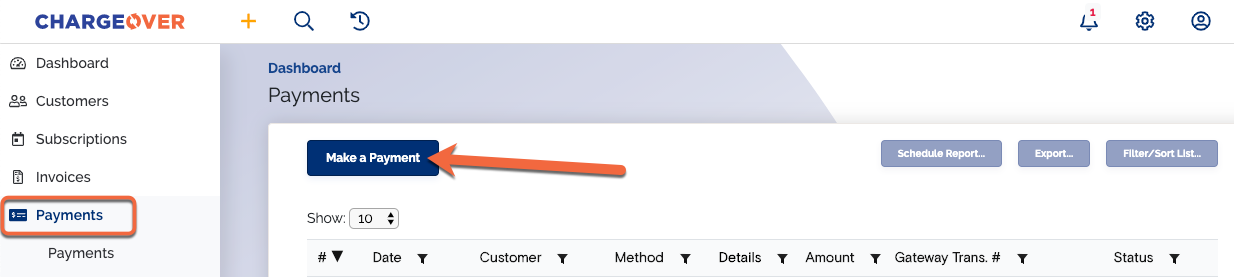
- This will prompt you to select one of your existing customers
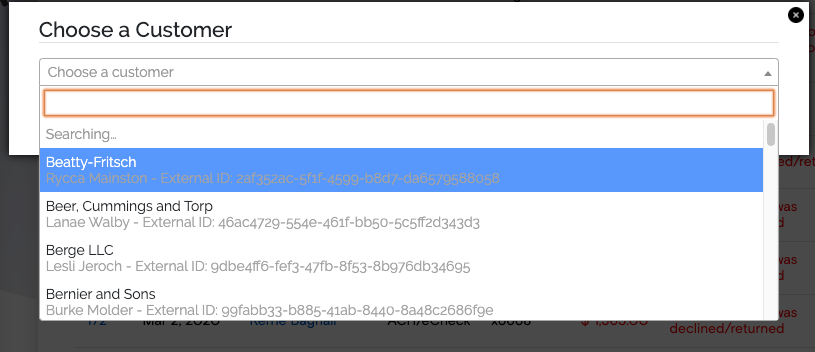
-
Once you have selected a customer and clicked
Continue, you will be brought to the "Make Payment" page, where you can do the following- Indicate a payment source. This is where you can select from a variety of payment methods to collect funds from a customer or to simply make a record that a payment was made elsewhere
- Specify amount to be paid towards the invoice's balance
- Select applied invoices to pay the entered amount to one or more invoices at once. If no invoices exist for this customer, then the payment amount will be retained as a credit for future invoices
- Add a note for any auditing requirements
- Add custom field information
- Add tags for any reporting purposes
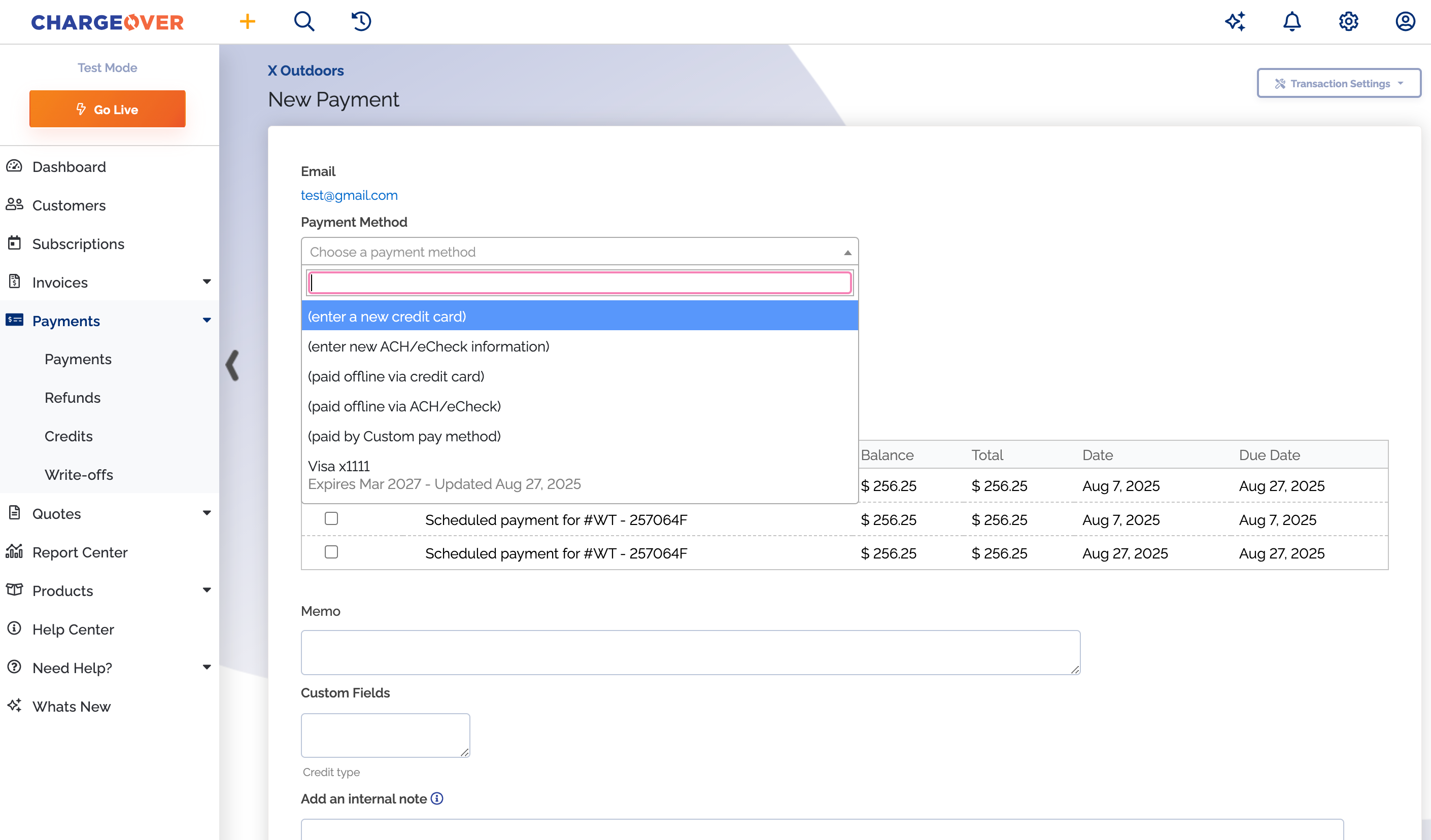
There are multiple different ways to record or make a manual payment. You can enable offline or manual payment methods, enable custom payment methods and even utitlize the invoice actions directly on an invoice, to make a payment manually. More information on each of these options are explained in this article.
Enable offline or manual payment methods
ChargeOver can record and accept paper check and other types of offline payments, in addition to online credit cards, prepaid credit cards and ACH payments.
These options are available for scenarios where you're collecting payment outside of ChargeOver but still need to record the payment.
Manual or offline payments still mark invoices as paid or reduce invoice balances in ChargeOver, and still sync to accounting platforms like QuickBooks and Xero as well.
Steps
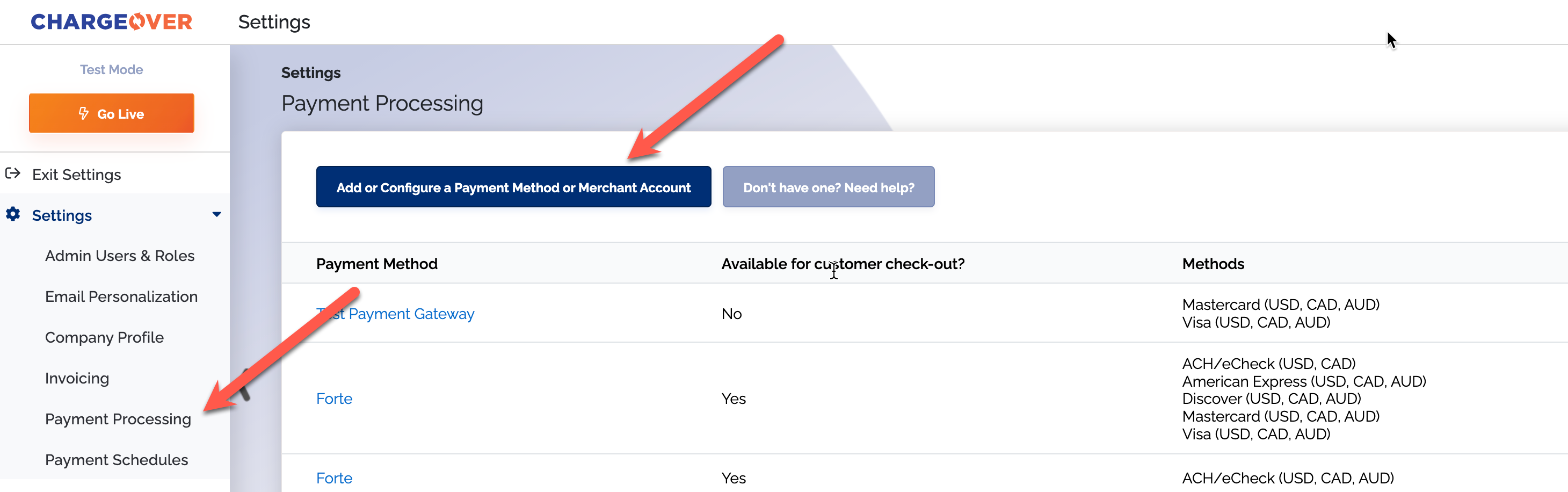
- Go to your Settings and select
Payment Processing from the left side menu - Then select
Add or Configure a Payment Method or Merchant Account
- Search "Offline" and choose the offline payment method that's applicable. Usually this will be the manual check option
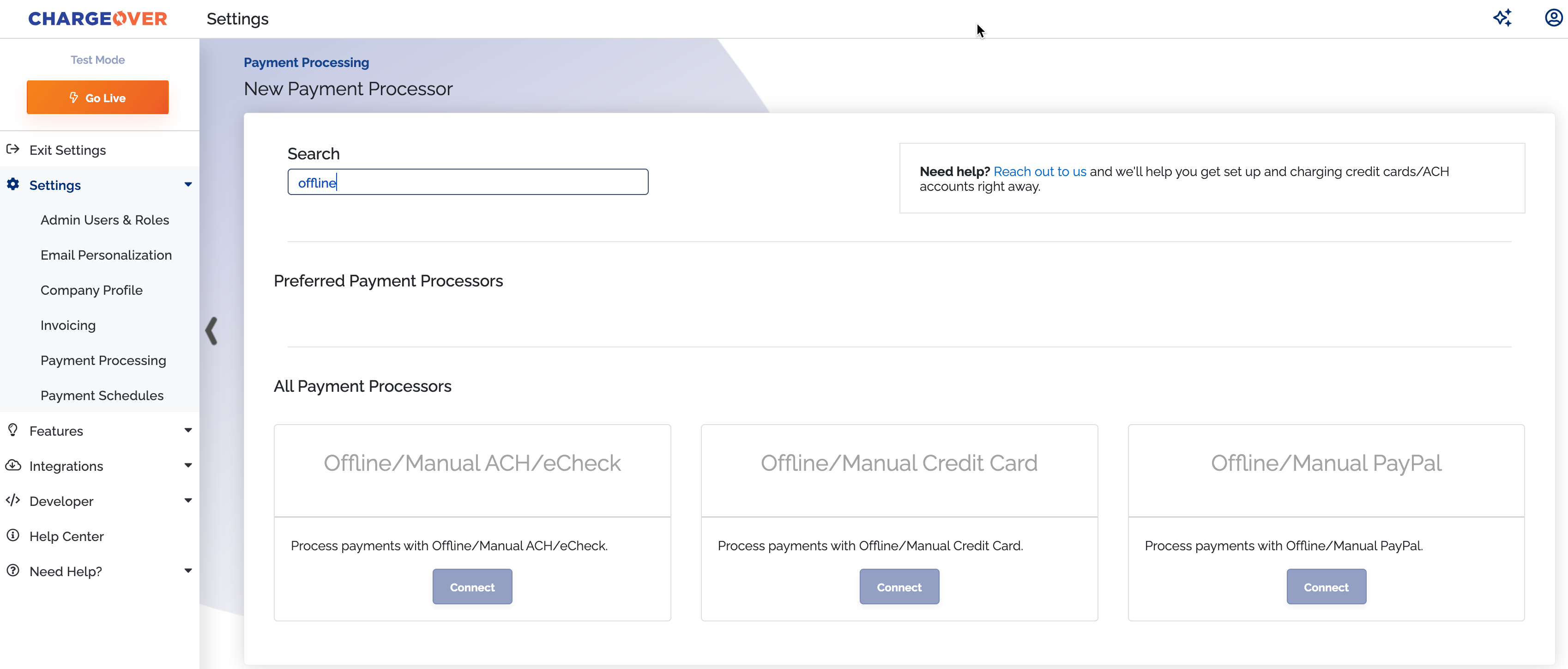
- Select
Connect
Once offline payments are enabled, you can follow the manual payment process to enter a manual or offline payment against any invoice.
Custom payment methods
If you want, you can enable and then create a custom payment method. This is a great way to keep track of payment methods that are specific to your business.
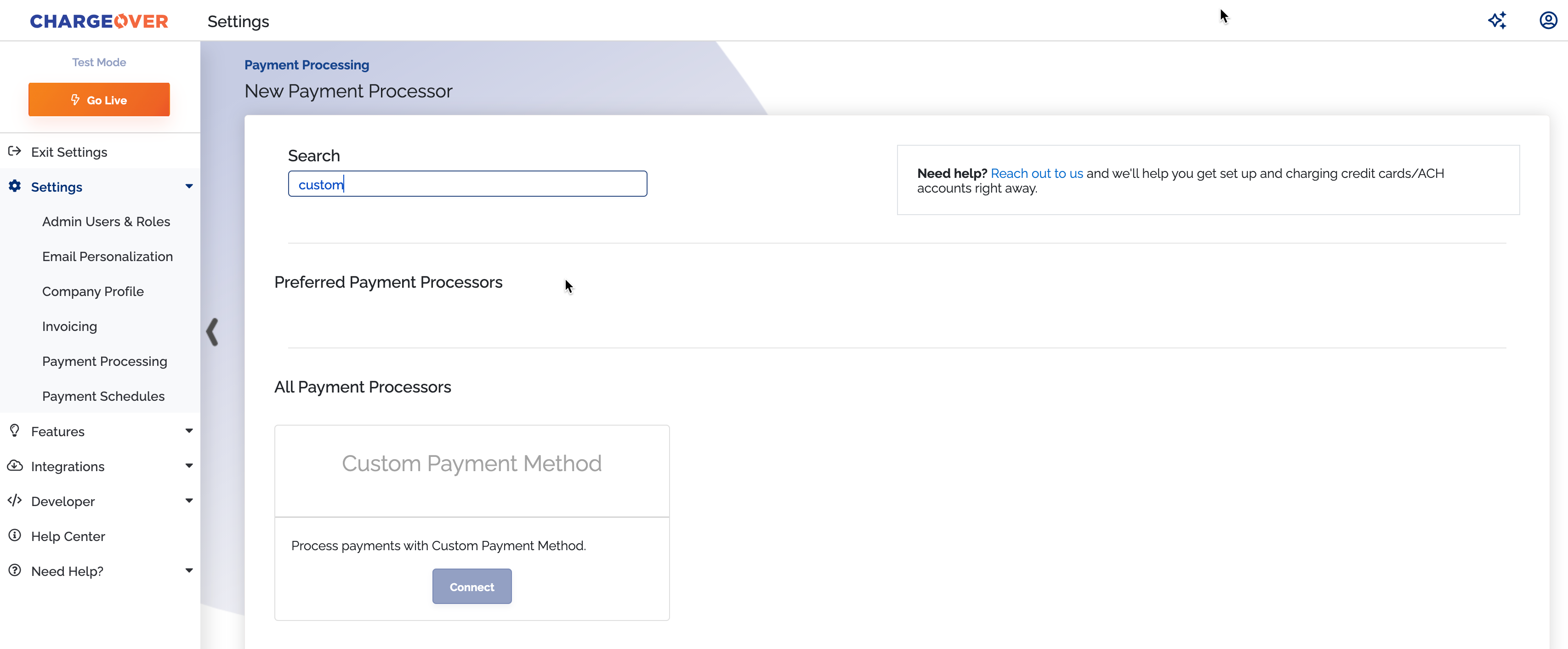
Go to your Settings and click the custom and the custom payment method option should pop right up.
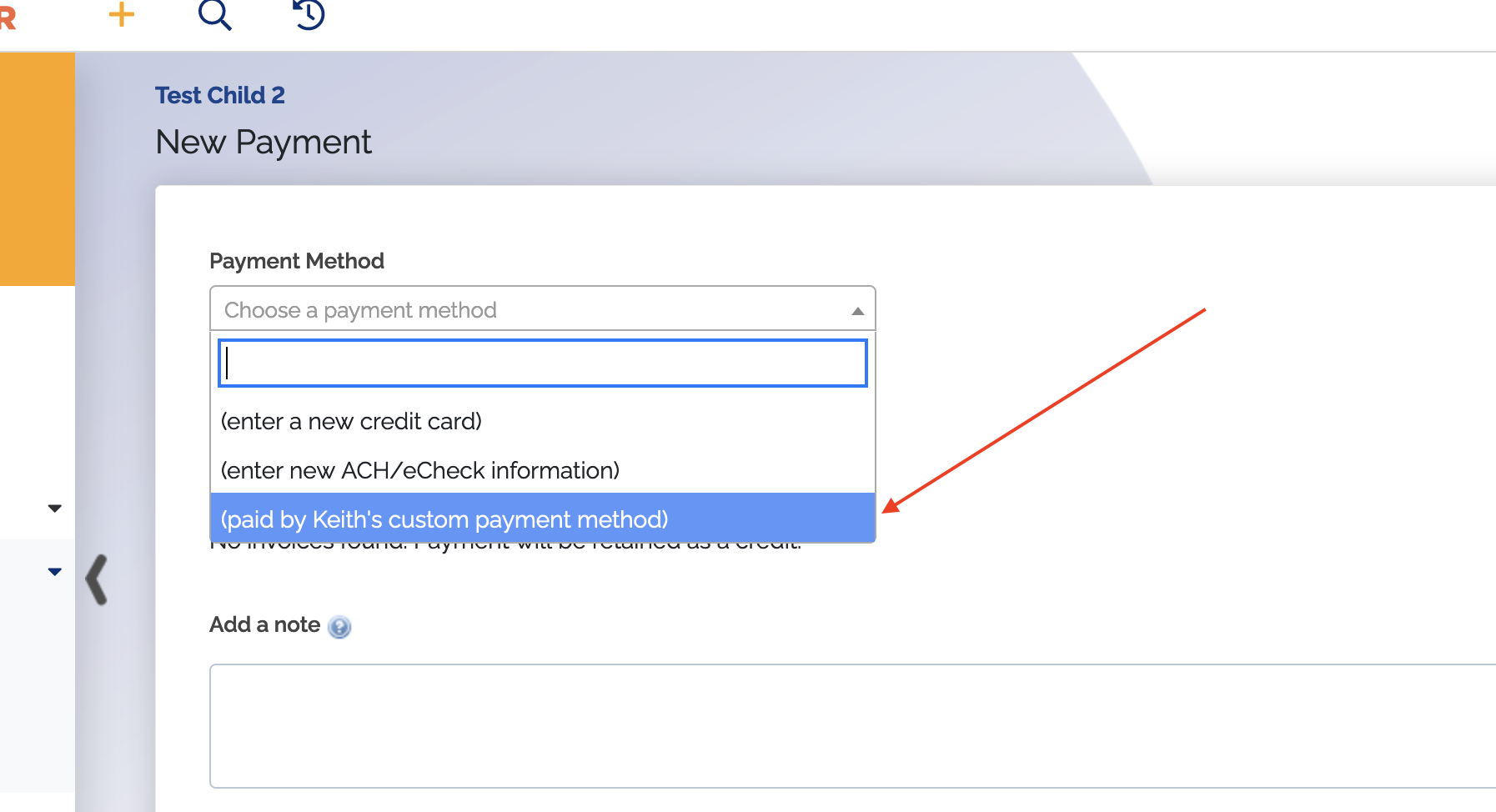
Once you enable the custom payment method, it will show up in the dropdown whenever you are making a payment on an invoice.
Invoice actions
Another way to make a manual payment, would be to utilize your invoice actions options that reside under a specific invoice.
Steps
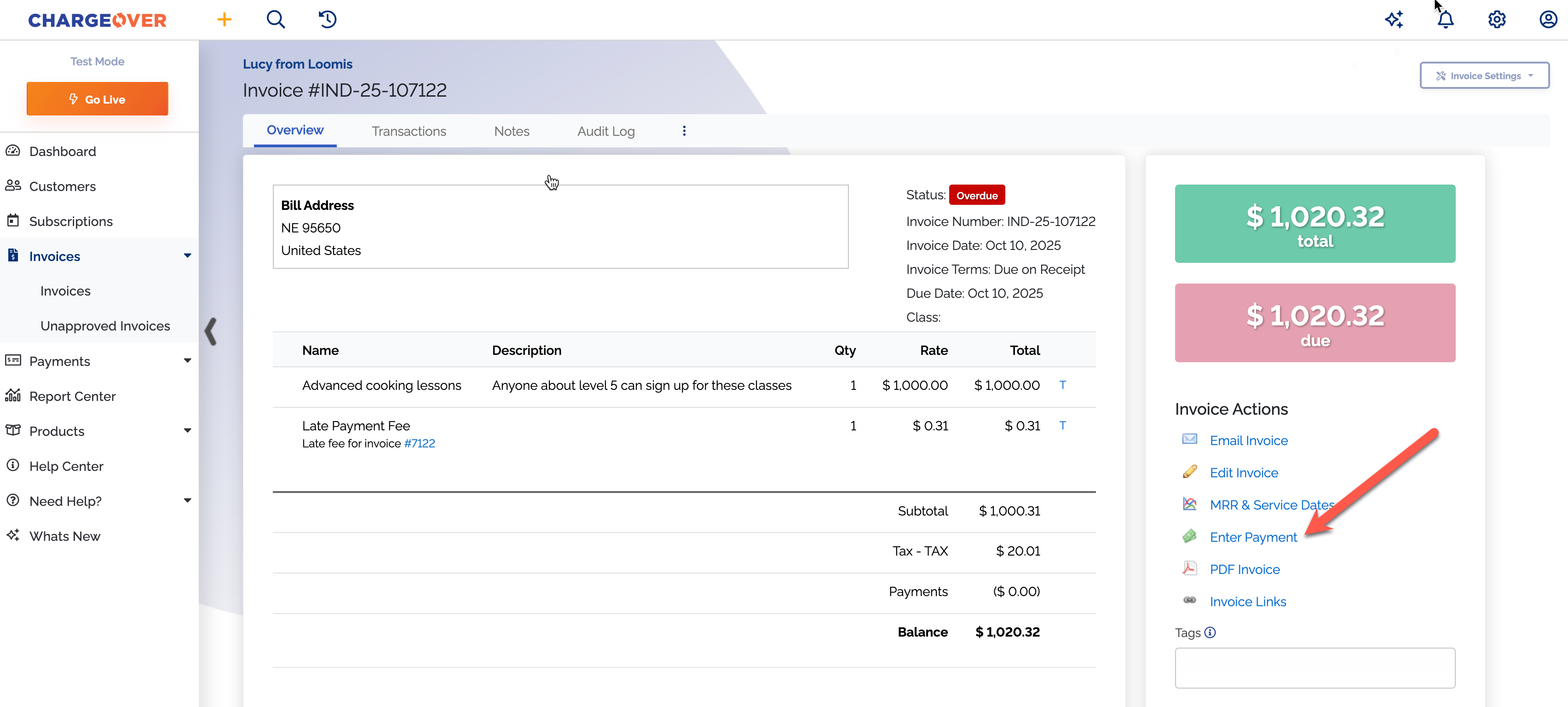
- Directly go to the invoice you want to make a payment for
- Under the header invoice actions, select
Enter Payment
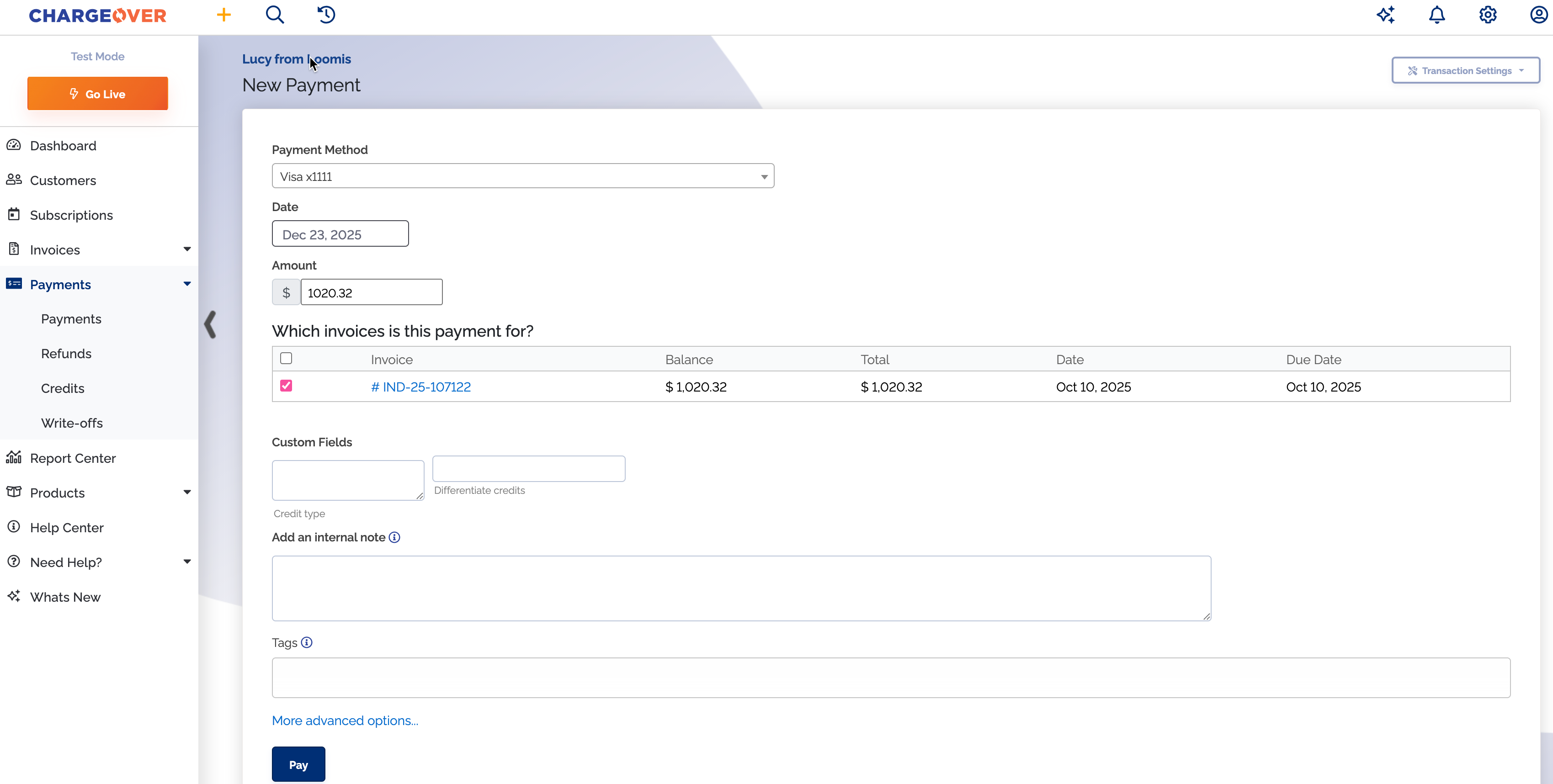
- Enter in the payment details and click
Pay
Allow customers to opt into auto pay
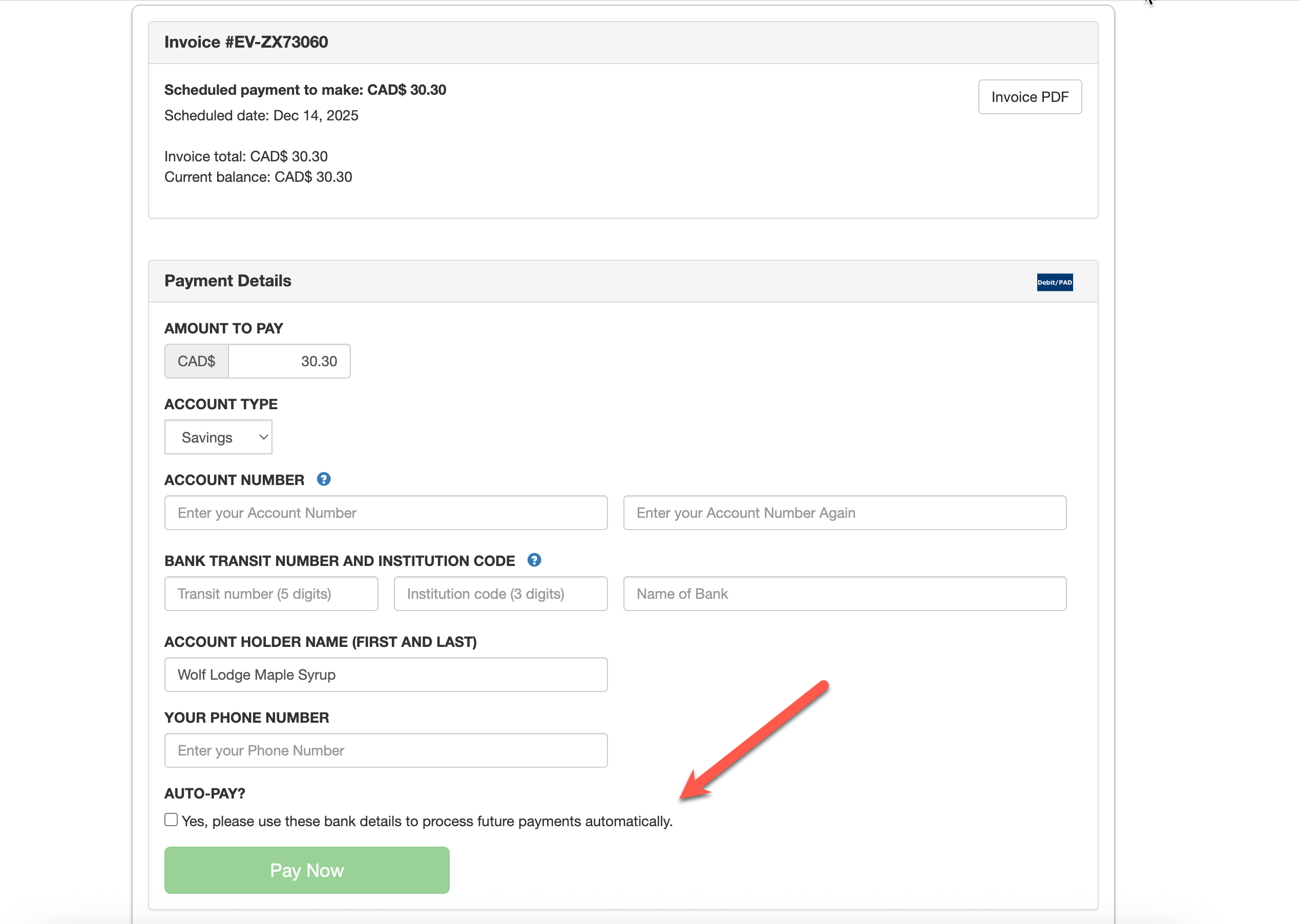
We can prompt the user if they want to opt into auto pay with a checkbox that says "AUTO PAY - would you like to automatically pay future invoices using this payment method?"
This allows customers to choose whether they want the card they have entered to automatically be charged for all invoices in the future, or if they want to make each payment themselves, when they choose.
Please contact us if you would like to enable this checkbox on your pay links. This is what it can look like on any pay link available in ChargeOver, once enabled:
Editing payments
Change a payments date
When entering manual payments for customers, you can choose the date of the payment and backdate it if you want. You can follow the steps below to enable the setting to change a payments date.
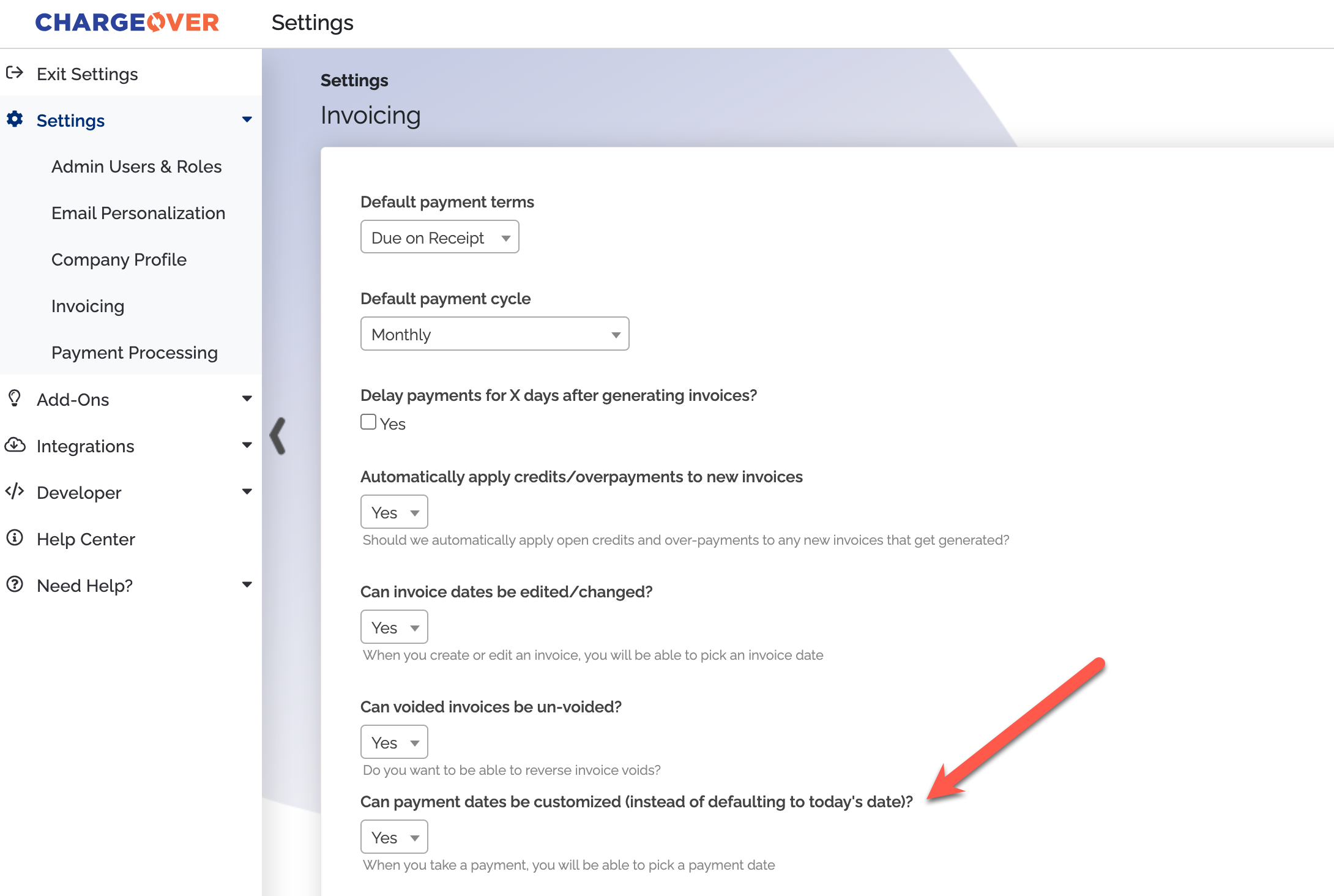
- Go to your settings
- Click into your
Invoicing tab - Change the toggle for 'can payment dates be customized (instead of defaulting to today's date)?' to Yes
Save your changes
- Then, you can create a manual payment
- You will see a date box where you can pick and choose the date you want to enter for that payment
- Save the payment and you are all set!
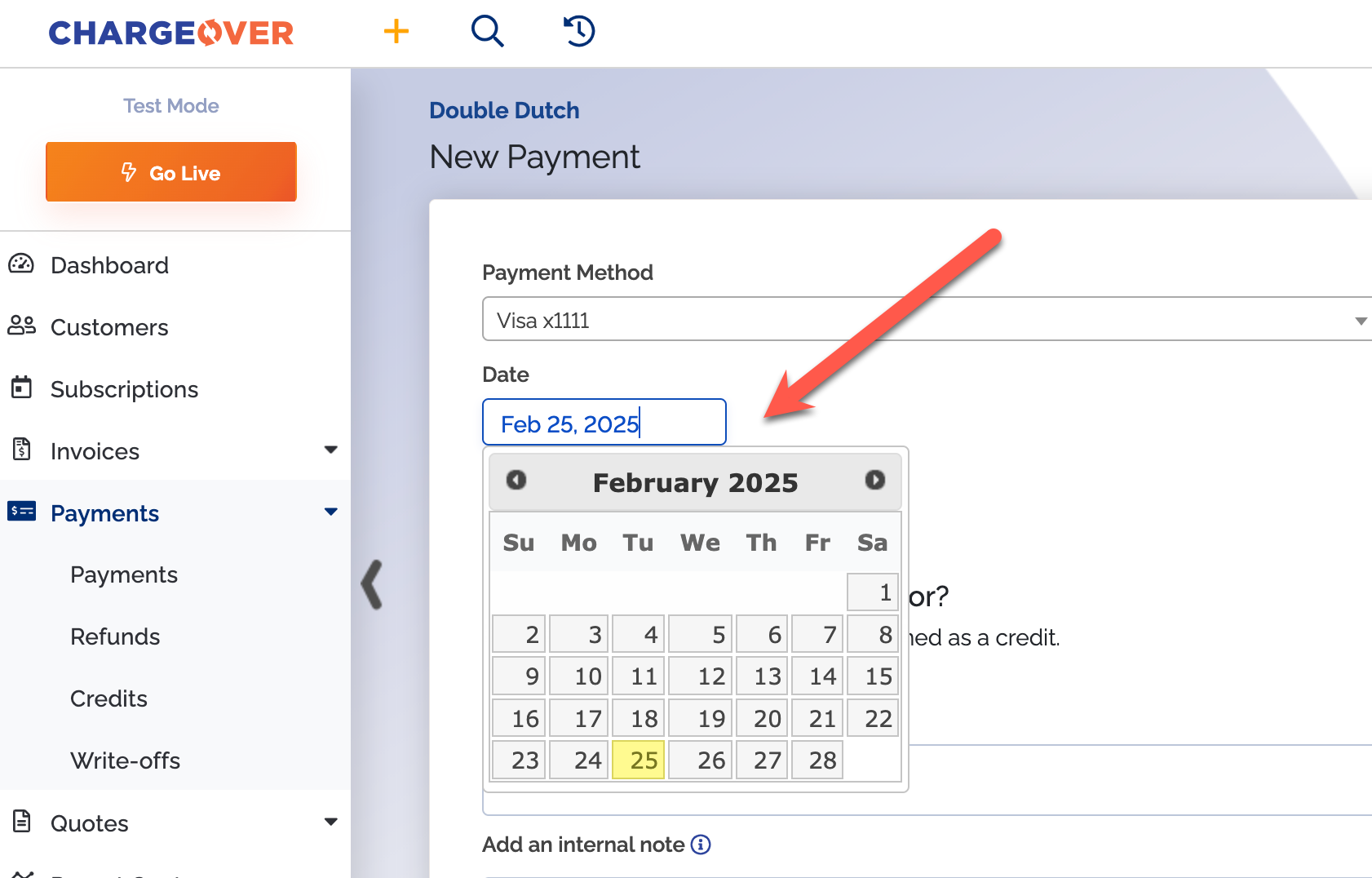
If there is an existing payment where you want the date edited, you can send your request to support@chargeover.com and we can do that for you.
Change applied amounts
You can change the applied amounts of a payment if you want to redistribute the payment to a different invoice or need to edit the invoice price for some reason.
- Go to the payment you want to change the applied amounts of
- Click the
Change Applied Amounts link under the header payment actions
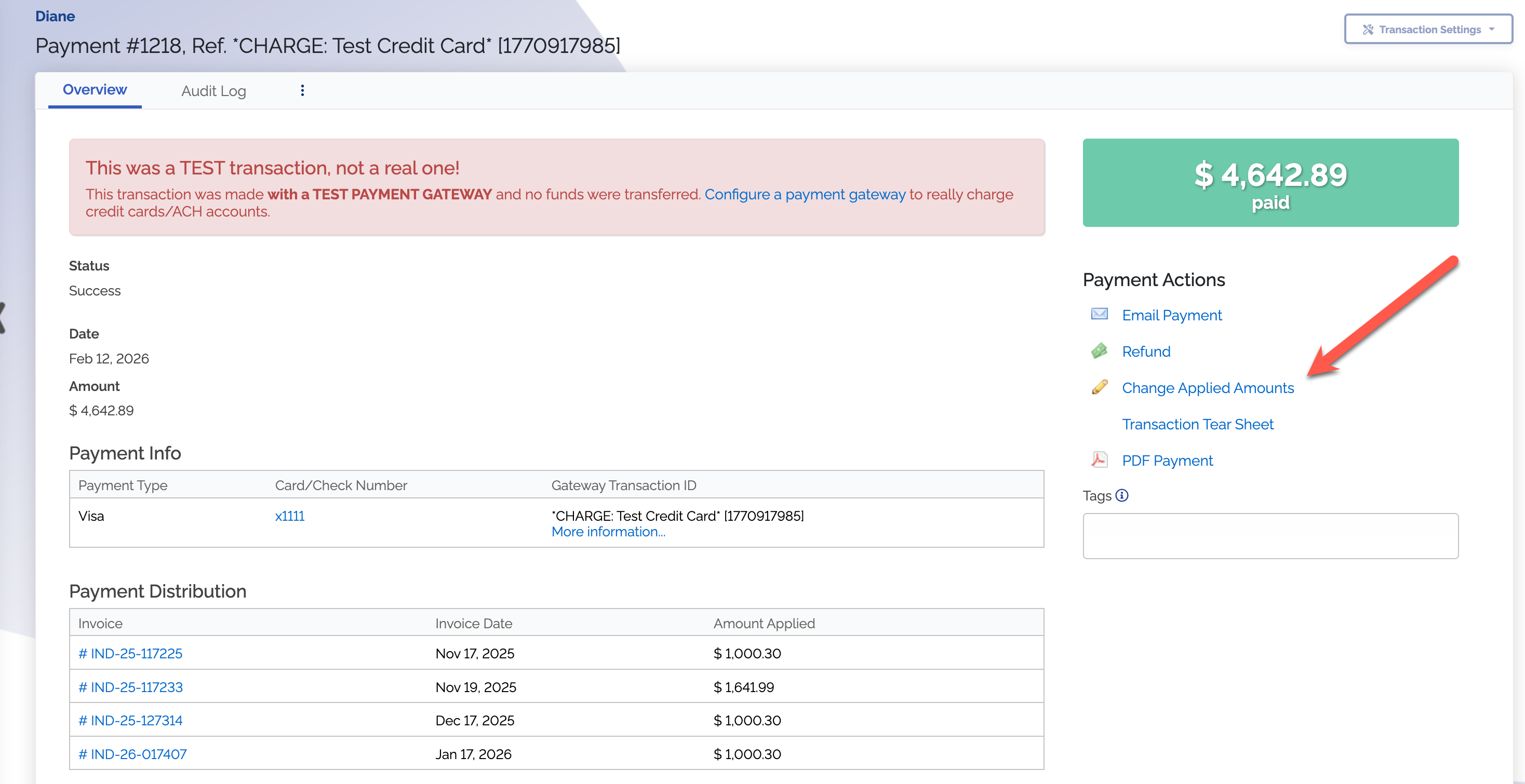
- You'll be given the option to specify which invoices, and what amounts, to apply the payment or credit to
- If you would like to remove part of the payment from an invoice, select the little black x on the dropdown for that invoice. Then enter in a 0 in the applied amounts column box. This will effectively remove the payment from the invoice after you save your changes.
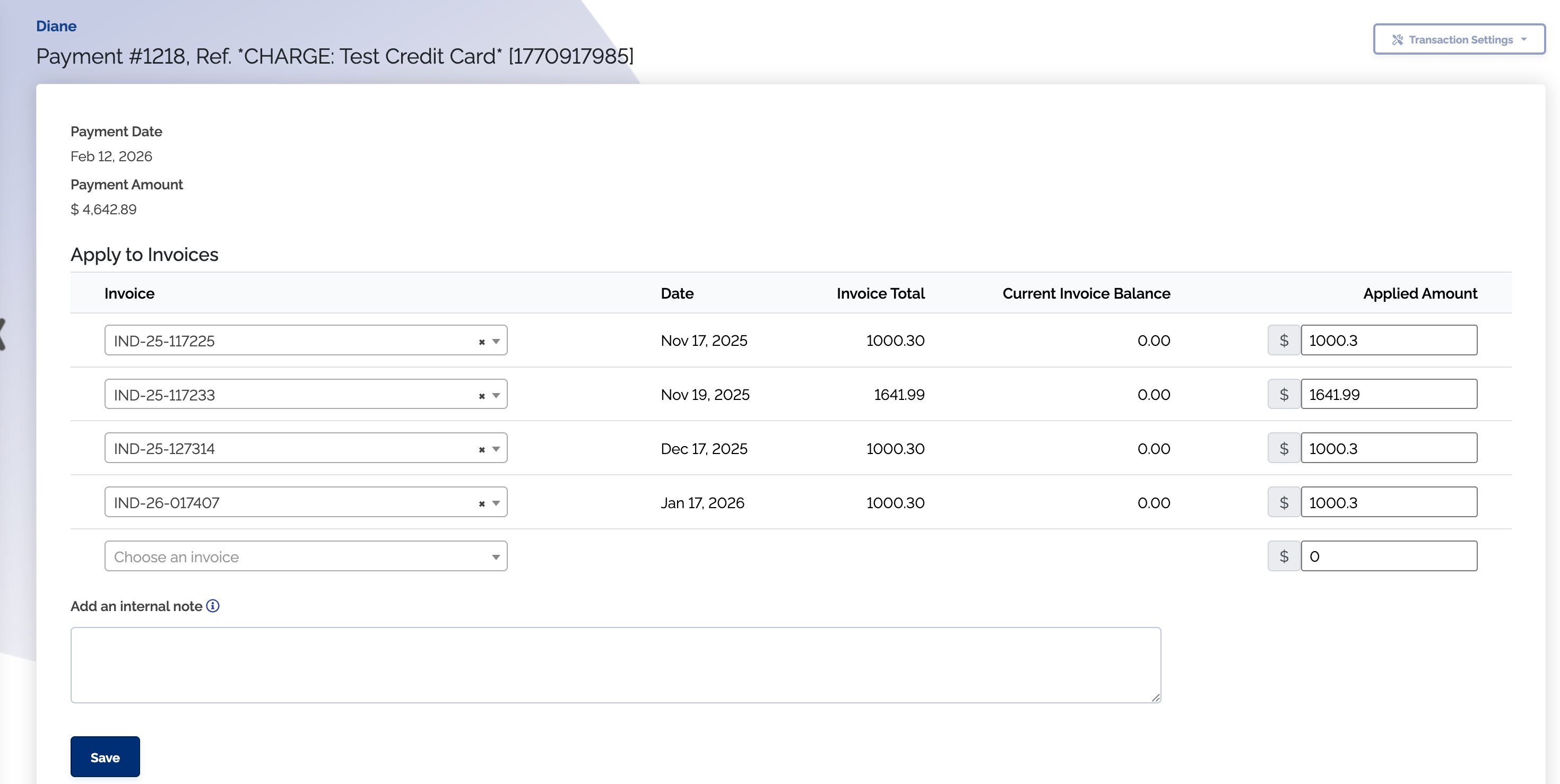
- You might even want to remove all of the payment from any invoices it is attached to, which you can do by selecting the little black x on the dropdown for that invoice for every invoice the payment shows it is applied to. You will also have to enter in a 0 in the applied amounts column box. After you save your changes, ChargeOver will re-assign the payment as an unapplied amount. If you want to refund the unapplied amount, you can do so by following our refund process.
The unapplied amount will look something like this:
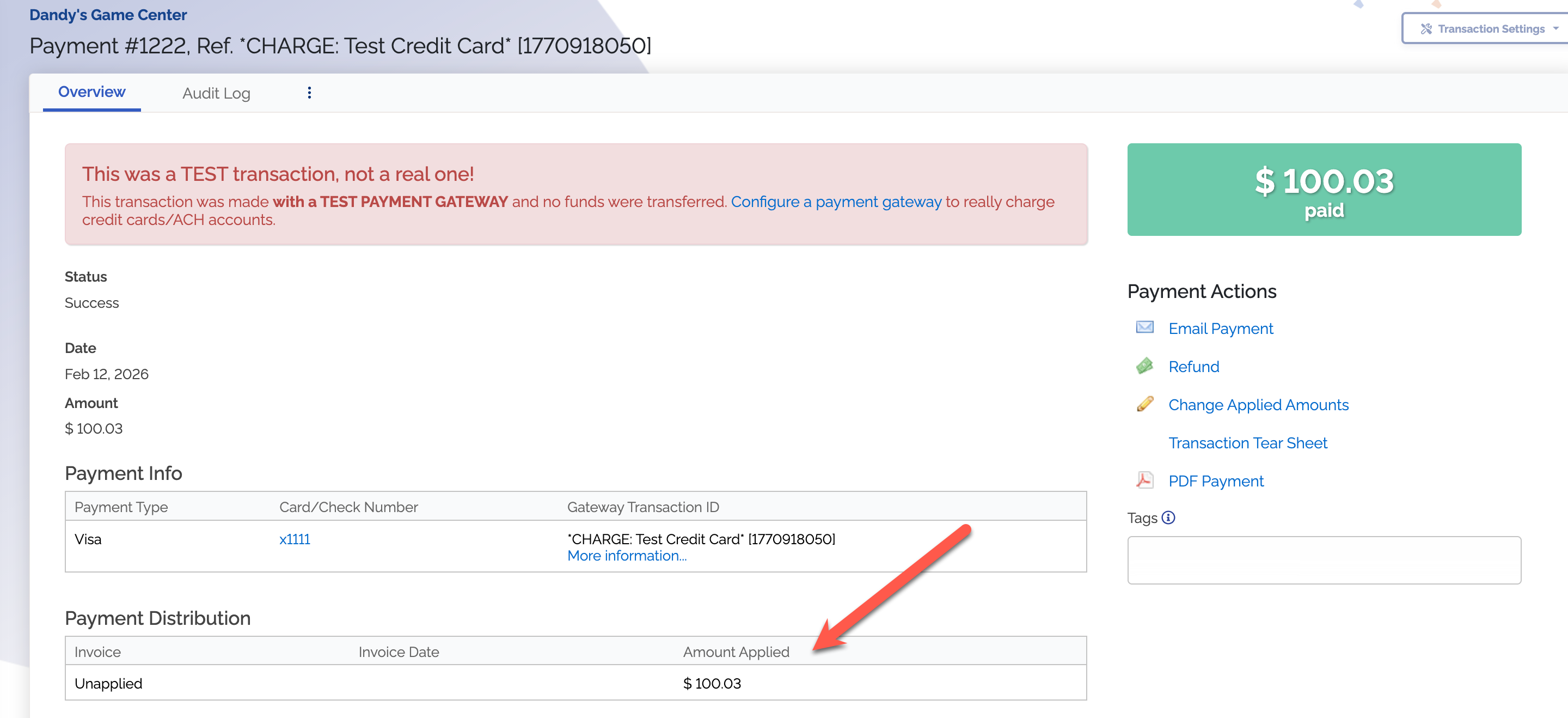
- Once you have finished deciding how you want the payment applied, you can
Save your changes
Void a payment
Even if a payment is cancelled or voided outside of ChargeOver (for example, if a customer cancels a paper check), you can mark it voided in ChargeOver to keep your records accurate.
If the payment was made through credit card or ACH, you will need to make sure to void or cancel it with your credit card or ACH processor.
Marking a payment void in ChargeOver will NOT void it with your processor automatically.
If you have ChargeOver connected to a payment gateway and would like to refund and or void a payment, you can view our refunds help article on how to do so.
Steps
- Find the payment you want to void from your Payments list
- Find the three vertical dots in the payment header
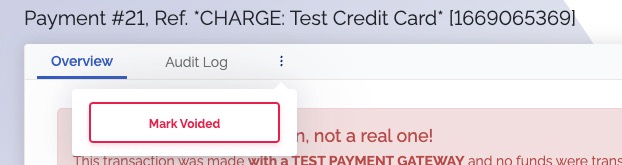
- Click the
Mark Voided button
You should now see that the transaction has been marked void in ChargeOver on the View Payment page as well as in the "Status" column in your list of payments.
Unvoid a payment
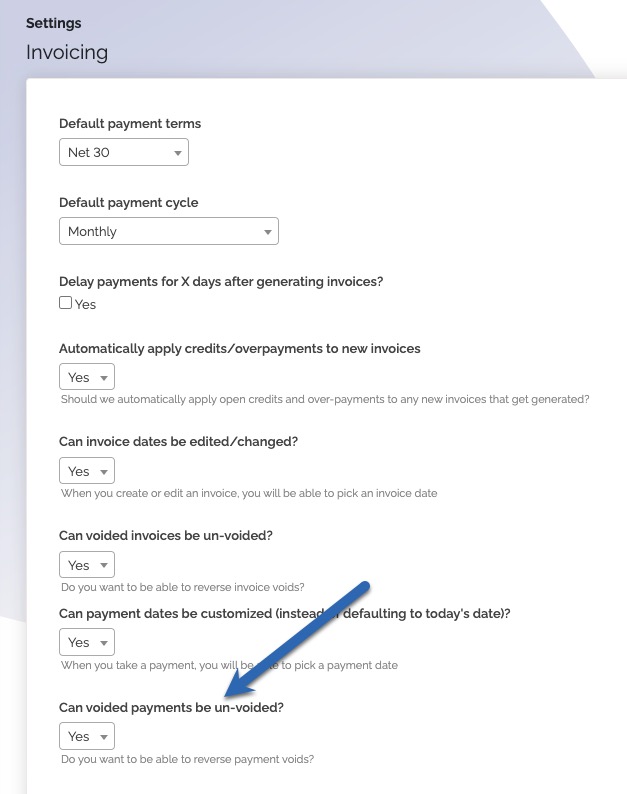
- Make sure that your setting in Invoicing "Can voided payments be unvoided" is set to Yes
- Go to the payment you would like to un-void
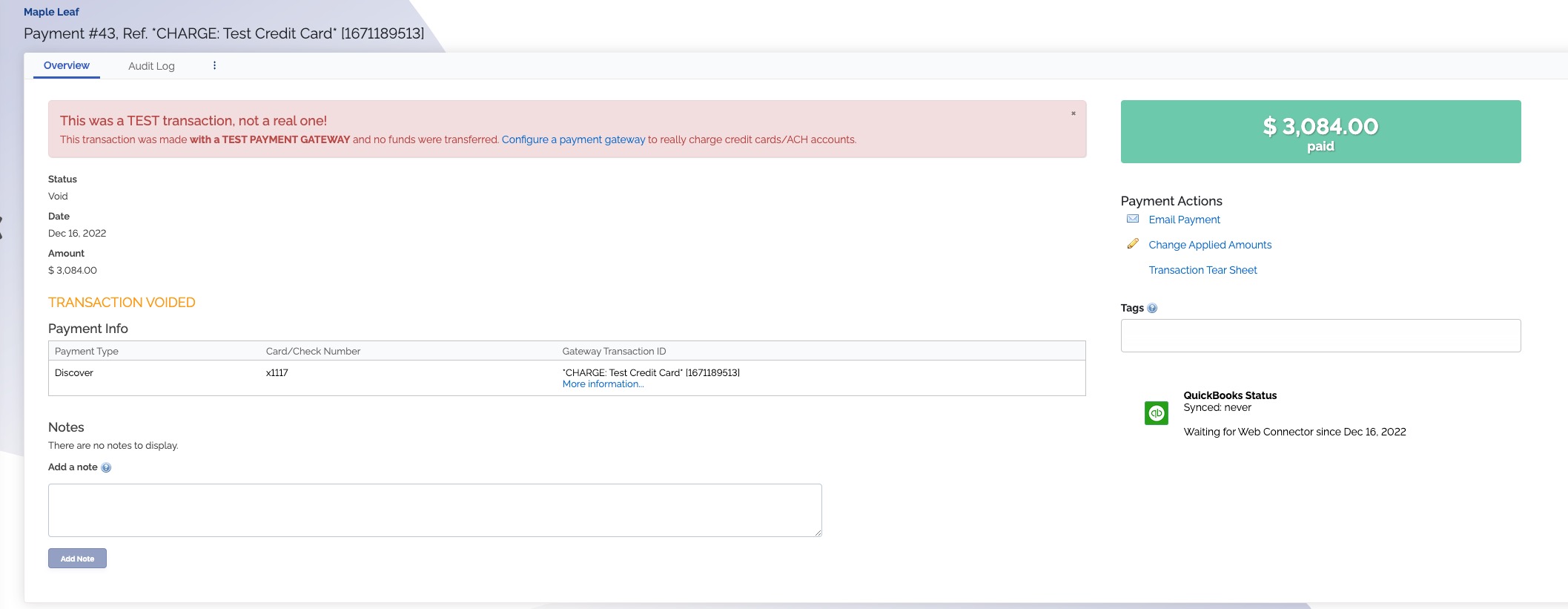
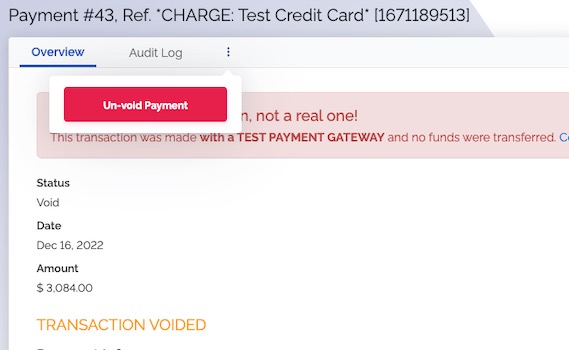
- Select the three vertical dots and click
Un-void payment
Cancel a payment
Did you accidentally charge someone the wrong amount? You can try to cancel or stop the payment before the money is pulled from the customers credit card or ACH account.
- For credit card payments, ChargeOver supports stopping them for most payment processors. You can stop a payment by issuing a full refund on the same day the payment was taken
- For ACH payments, ChargeOver supports stopping a payment for some payment processors. You can stop an ACH payment by contacting your payment processor and asking them to cancel it. If they're successful with stopping the payment, you can mark the payment as void or declined in ChargeOver.
Keep in mind
-
With most payment processors, you will not be able to cancel a payment yourself. You will need to call them to cancel a transaction, regardless if it is a credit card or ACH payment.
-
Authorize.net is one of the payment processors that allows you to cancel a transaction yourself in their system. You can void both ACH transactions and credit card transactions with them. Steps on how to do this are here on their website.
Void or stop a payment that was charged or made by mistake
-
Check with your payment processors to be sure you can void a credit card payment after it has been sent to be processed. Then either ask your payment processors how to void the payment yourself within your gateway account, or have the payment processors void the payment for you on their end.
-
Once the payment has been failed within the payment processors, you can login to your ChargeOver account and find the customer and the payment you need to mark as voided or failed. Select the "Mark payment as declined/failed" action on the right hand side of your screen, under Payment Actions.
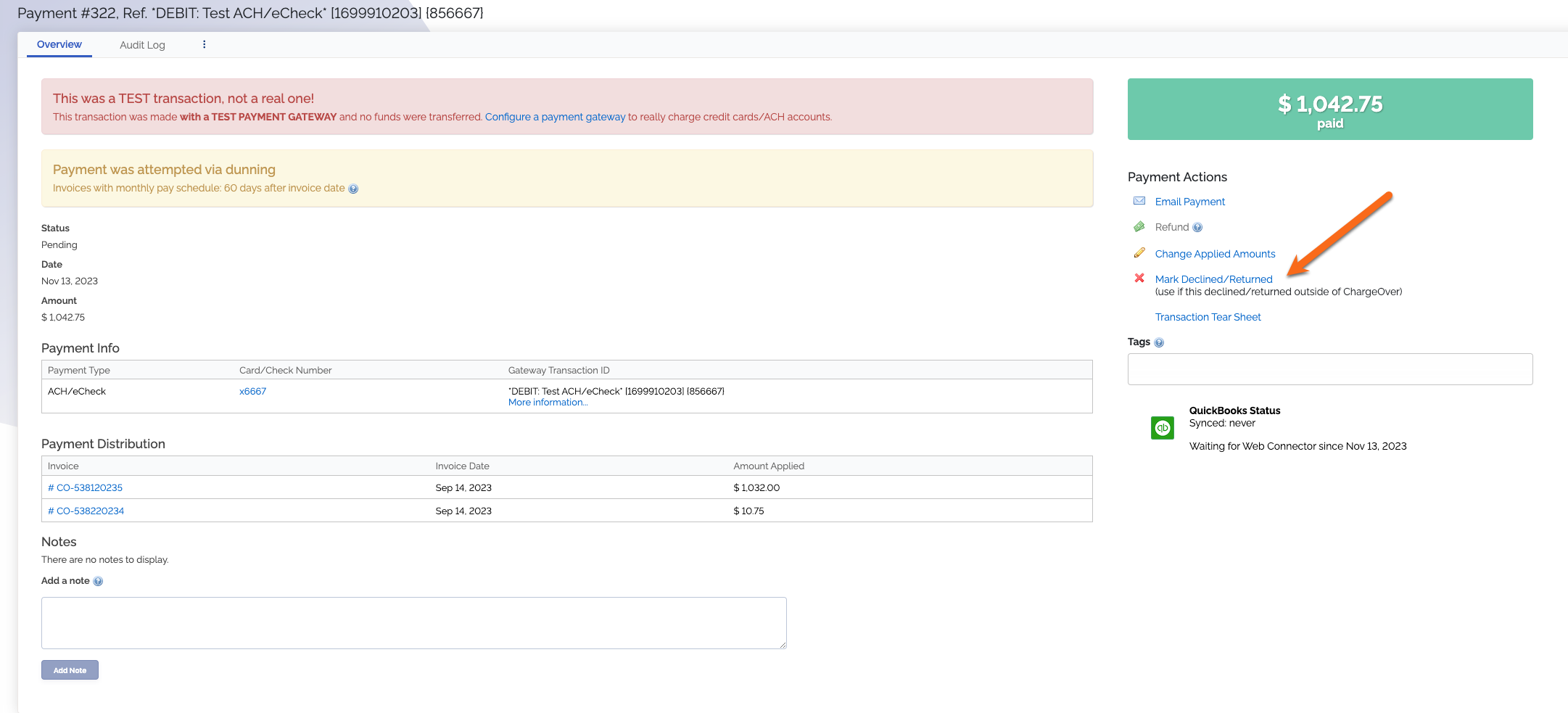
Completing these steps will ensure that the payment is marked as voided or failed within your payment processors and your ChargeOver account.
You can also try to refund the payment if you were not able to stop it before funds were taken from the customer. Some payment processors do not allow this, so ask your payment processor for more information if you find yourself unsure of their rules.
An expired credit card made a successful payment
Sometimes you will see that a payment went through successfully for a customer who is using an expired credit card. Although credit cards have an expiration date, it's very common for a credit card company to re-issue the same card number, to the same person, with an updated expiration date.
When a bank is in the process of issuing the same card number to a customer with an updated expiration date, most banks will allow them to continue to make payments against that card, even though it has technically "expired." So, if you see a payment succeed against a card that has expired, the card was most likely just re-issued to the cardholder with a new expiration date.
This is done by Visa, Mastercard, etc. as a convenience to both the cardholder and the merchant.
The end result of this for both parties? The cardholder doesn't have to go to each merchant and update their card and the merchant receives less declines!